
It takes a village to raise a child. This programme seeks to bring that village together.
Councillor Richard Kemp CBE, Chair of Local Authorities’ Mutual Investment Trust (LAMIT)
Councillor Richard Kemp CBE, Chair of Local Authorities’ Mutual Investment Trust (LAMIT) and former Lord Mayor of Liverpool, opens the Care Leavers Programme ‘Beyond the System’ conference held in January at CCLA.
The event brought together government representatives including Josh MacAlister, the Minister for Children and Families, representatives from the LGA, community foundations, charities and care-experienced advocates to discuss how to build and deliver long-term support over and above that delivered by statutory requirements.
Launched in 2024 by the Local Authorities' Mutual Investment Trust (LAMIT), UK Community Foundations (UKCF), in collaboration with CCLA, the programme last year received additional funding from the Henry Smith Foundation bringing the total value to £7m, including matched funding. Already supporting over 2,000 young people in its first year, the expansion has seen it grow from 17 to 31 community foundations around the UK.
Participants noted that while national policy frameworks are often good, implementation on the ground is not always consistent. A lack of readily available information often leaves care leavers in the dark about what services they are entitled to. Care leavers receive free prescriptions, dental care, and eye care, but also face administrative and transport barriers when seeking to access them. Similarly, they might be placed in council housing temporarily, only to be moved to other accommodation after a short period, making it difficult to find and sustain employment.
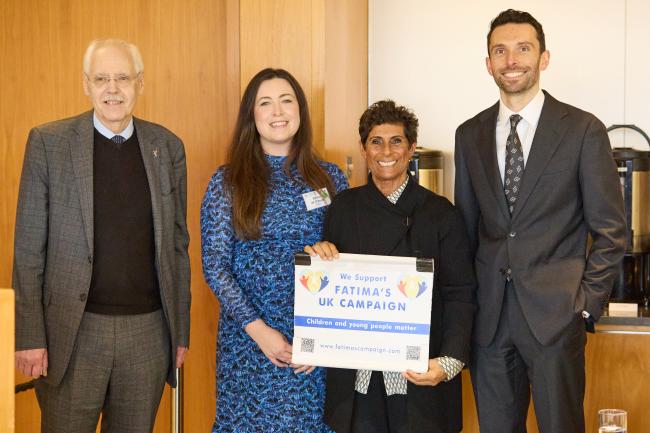
Pictured: Cllr Richard Kemp CBE, Chair of LAMIT and Former Lord Mayor of Liverpool; Emma de Closset, CEO of UKCF; Fatima Whitbread, Olympic medalist and Fatima's UK Campaign Founder; Josh MacAlister, Minister for Children and Families.
When deep local knowledge is connected nationally, patterns emerge. Across our network, that has helped us surface shared challenges – from access to resources to gaps in support for care-experienced people – and create new opportunities for civil society and the state to work together.
Emma de Closset, CEO of UK Community Foundations (UKCF)
Place-based responses emerged as a key strength of the programme model that seeks to support care leavers to survive and thrive. Care leaver advocates addressing the roundtable described a ‘postcode lottery’ where statutory support varies widely depending on location, while community foundations from Cumbria to London compared the differing challenges presented by rural and densely urban settings.
The conference frequently reiterated the power of the hyper-local, flexible funding provided to community organisations through the Care Leavers Programme . Allowing community foundations to partner with their local council and other local charities, the model empowers them to tailor initiatives to their local areas, and to meet individual needs as and when they arise.
The discussions were anchored by three core themes essential for care leavers to successfully navigate the transition to adulthood: housing, financial stability and, crucially, loving relationships.
Without a safe home and enough money to live on, young people cannot focus on their aspirations. But while the state might support care leavers into housing and employment, it cannot provide the organic network of trusting, caring relationships that is at the heart of human vulnerability.
What is the practical thing you need in order to deliver joined-up care for your community’s care leavers?
Passion and desire to partner with other organisations…a meeting of minds and a meeting of determination and spirit.
Richard Kemp CBE, Chair of LAMIT
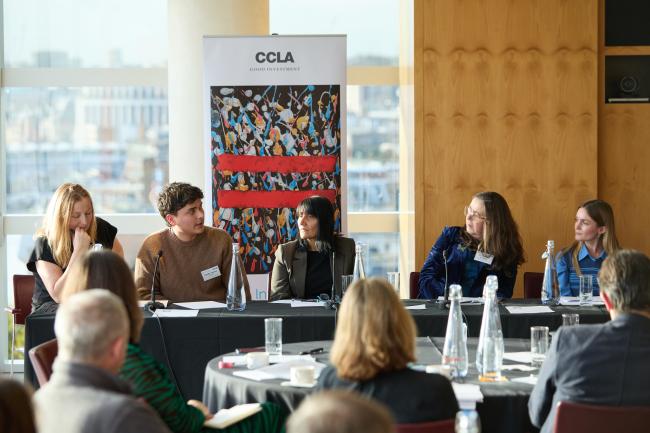
As in many family settings, the need for guidance and support does not end when the individual reaches adulthood, but rather when the young person has achieved genuine stability. For care leavers, the ‘village’ that Cllr Kemp invoked needs to be built on passion and partnership, to not only include practical support, but also genuine care for those young individuals who often lack families to call their own.
What needs to happen now?
- For the village to come together. The conference called for a unified effort between civil society, government, private enterprise and philanthropists to plug the gap care leavers face.
- Bring partnership and passion. Cllr Kemp wants to see local authorities around the country, in conjunction with the LGA and CCLA, hold five convening events over the next year to bring together stakeholders in their community.
- Put care leavers at the centre of decision making. Invite care-experienced young people into ‘co-production’, where their voices directly shape the services they use.
- Recognise care experience as a protected characteristic. Following on from councils like Liverpool and others’ lead to raise awareness of the difficulties faced by care leavers and to fight discrimination.
For more information or to discuss how you can get involved in the Care Leavers Programme, please contact: partnerships@ukcommunityfoundations.org